
How to Prepare Your Driveway & Property for Snow Removal
A little preparation before winter — and before each major snowfall — can make snow clearing easier, safer and more efficient.
Once snow starts accumulating, objects that are obvious in summer can quickly disappear. Garden edging, extension cords, toys, low landscape features and even the edge of a driveway can become difficult to see under fresh or drifting snow.
Taking a few simple steps before the snow arrives can help protect your property and make winter maintenance much easier.
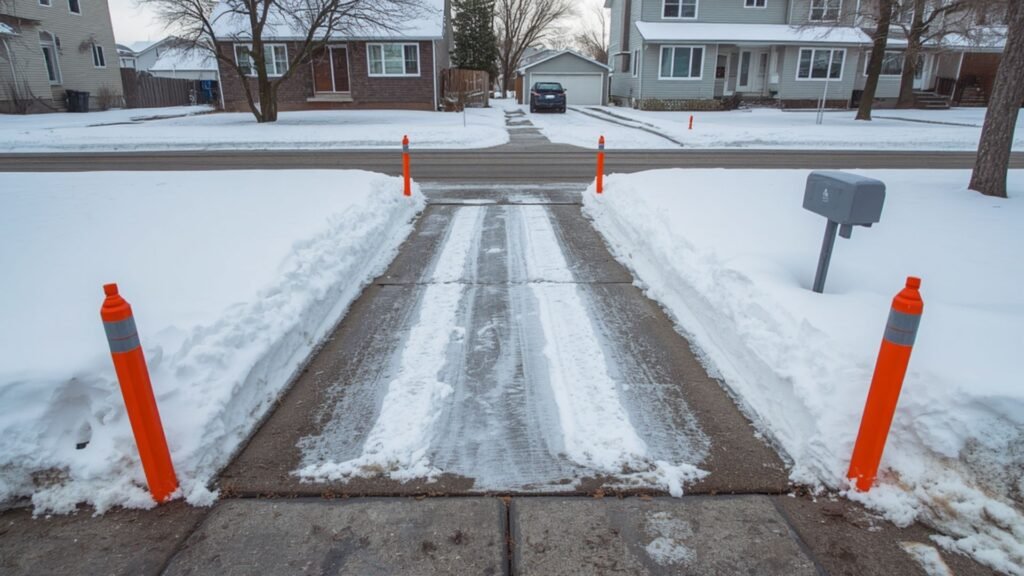
1. Mark the Edges of Your Driveway
When snow covers the ground, it can be difficult to tell exactly where a driveway ends and the lawn, gravel or landscaping begins.
Driveway markers placed along the edges can make those boundaries easier to identify throughout the winter.
Markers can be particularly helpful around:
- Curves and narrow sections
- Changes in driveway width
- Culverts and drainage areas
- Raised landscaping
- Retaining walls
- Other features close to the driveway edge
Install markers before the ground freezes whenever possible.
2. Remove Objects That Can Disappear Under Snow
Before winter arrives, walk around the areas that will need to be cleared and look for anything that could become hidden by snow.
Common examples include:
- Garden hoses
- Extension cords
- Children’s toys
- Sports equipment
- Small planters
- Decorative items
- Low solar lights
- Temporary signs
- Loose branches
- Garden tools
An object hidden beneath the snow can be damaged during clearing and may also damage snow-removal equipment.
3. Keep Vehicles Out of the Clearing Area
A vehicle left in the driveway can prevent the entire surface from being cleared and may leave packed snow around the tires.
When snow removal is expected, move vehicles to an appropriate location whenever possible so the driveway can be accessed.
For properties with several vehicles, decide ahead of time where they can be moved during snow clearing.
4. Check Gates, Walkways and Entrances
If snow needs to be cleared from a backyard path, side entrance or other gated area, make sure the route is accessible.
Check that:
- Gates open properly
- Latches aren’t frozen or buried
- Walkways are free of stored items
- Steps and entrances are accessible
- Garbage and recycling containers aren’t blocking the route
Remember that deep snow and drifting can make narrow access points much harder to navigate than they are during the summer.
5. Identify Areas Where Snow Can Be Placed
Snow has to go somewhere.
Before winter, look at your property and identify practical areas where cleared snow can accumulate without blocking:
- Driveway visibility
- Sidewalks and walkways
- Doors and gates
- Utility equipment
- Drainage routes
- Garbage and recycling collection areas
As winter progresses, available storage space can become increasingly important, particularly after repeated heavy snowfalls.
6. Pay Attention to Drainage
Snow piled in the wrong location can create problems when temperatures rise.
Melting snow needs somewhere to drain. Large piles near foundations, low areas or drainage routes can contribute to pooling water and refreezing.
Before winter, take note of where water normally moves around your property and try not to create snow piles that unnecessarily interfere with that drainage.
7. Make Steps and Changes in Elevation Easy to See
Steps, curbs, retaining edges and sudden changes in elevation can become difficult to identify after fresh snow.
Consider marking features that may not be obvious once covered.
This is especially useful around:
- Front steps
- Side entrances
- Raised walkways
- Retaining walls
- Curbs
- Ramps
Good visibility helps anyone clearing the property understand where the surface changes.
8. Keep Garbage and Recycling Days in Mind
Garbage, recycling and compost carts can easily become obstacles during or after a snowfall.
On collection days, place carts where required for pickup, but avoid leaving them in areas that need to be cleared longer than necessary.
After collection, returning carts to their storage area helps keep driveways and access routes open.
9. Prepare Before Leaving Home for an Extended Period
If you’ll be away during the winter, prepare the property before you leave.
Remove movable objects, make sure driveway markers are visible, arrange where vehicles will be kept and ensure anyone responsible for the property knows which areas need attention.
Remember that snowfall, drifting and City sidewalk-clearing responsibilities can continue while you’re away.
10. Do a Quick Check Before Major Snowfall
Even if you prepared the property in the fall, things move during the winter.
Before a significant snowfall, take a quick look around the areas that will need clearing.
Move anything that has appeared since your last check and make sure entrances, driveway markers and access routes are still visible.
A few minutes of preparation before the snow arrives can prevent considerably more work afterward.
A Better-Prepared Property Is Easier to Maintain
Winter snow removal begins before the first shovel, snowblower or plow touches the ground.
Clearly marked boundaries, open access routes, fewer hidden obstacles and sensible snow-storage areas can make a property easier to maintain throughout a Regina winter.
Preparing early also means you won’t be trying to find driveway markers, move frozen objects or reorganize the property after the ground is frozen and the snow has already arrived.
For more practical information about snow, ice and winter property maintenance, visit our Regina Winter Resources.
or Call 639-739-4440